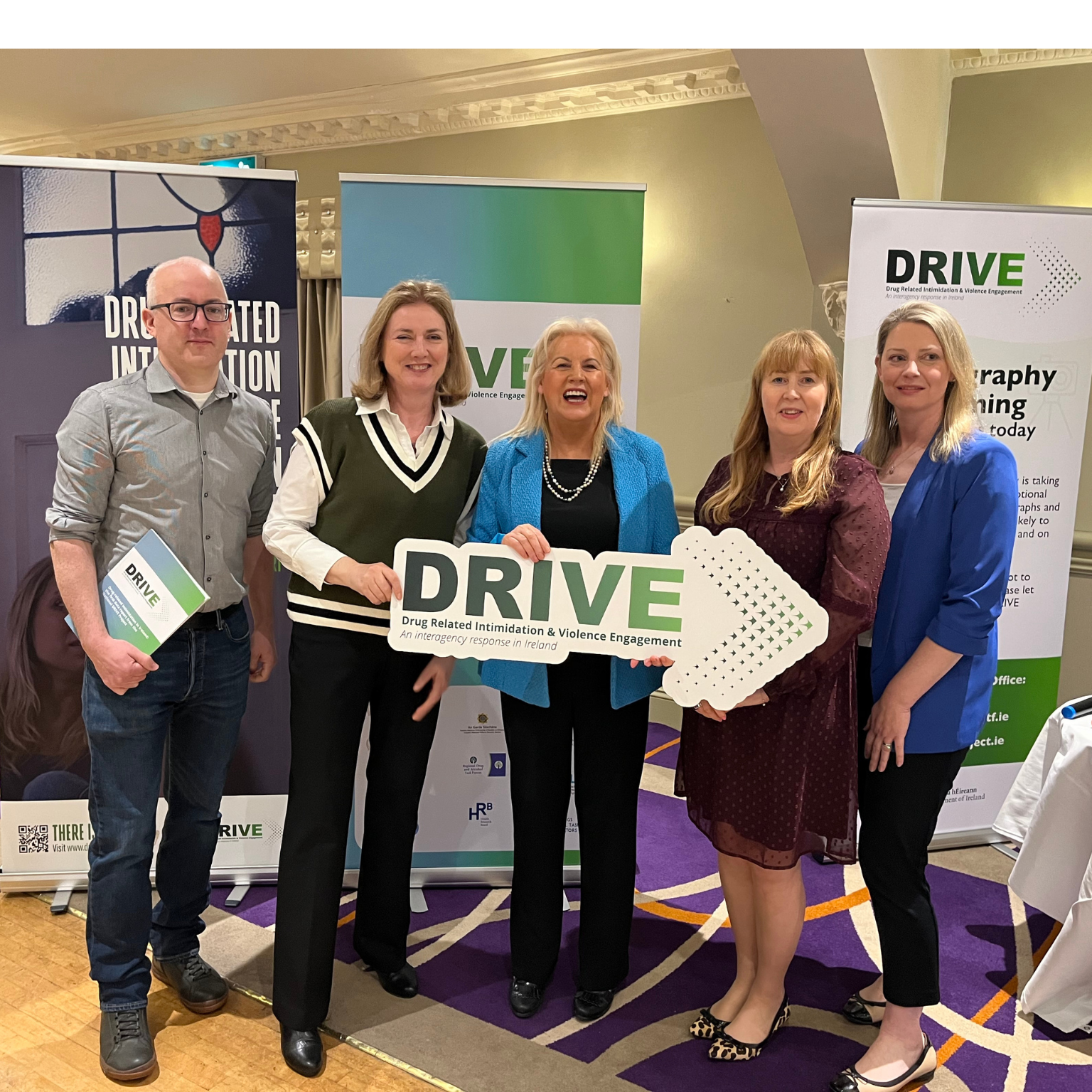
Findings from the first national publication on drug-related intimidation (DRI) show 1,027 cases of DRI among people engaged with addiction and/or family support services in Ireland during the 2025 data collection period*.
The data was collected using the Health Research Board’s (HRB) National Drug Treatment Reporting System (NDTRS) on behalf of the DRIVE project, which aims to respond to DRI and associated violence in Ireland.
Cocaine is the main drug linked to DRI (59%). All age groups from under 18s to over 50s are affected by it. The median age is 35; The majority of cases are aged between 20 and 44; and 4% are under 18.
There were more cases involving men (59%). 63% lived with family (including parents, partners, child/children), indicating potential hidden harm in households. DRI was reported in every county.
Speaking at the launch, Minister Murnane O’Connor, Minister with responsibility for National Drugs Strategy said:
“Drug related intimidation is very insidious and frightening.
“We want people who are affected by this to know that they are not alone. As this report demonstrates, this is an issue affecting every community and people from all walks of life. Local Drug and Alcohol Task Forces can put you in touch with a range of confidential services and supports in your local community and Gardaí are on hand to offer advice without the need to make formal complaints.
“I want to acknowledge the work of Drug and Alcohol Task Forces who are rolling out DRIVE-specific training to sectors so that we can respond effectively and support people all over the country who are impacted.”
Commenting on the report, Dr Suzi Lyons, Head of National Health Information Systems at HRB and member of National DRIVE Oversight Committee said:
“This first data report from the DRIVE project confirms the lived experiences of people affected by drug-related intimidation in Ireland. It shows that drug-related intimidation affects everyone, both old and young, families, friends and the wider community.
“Ireland is leading the way in systematically capturing the evidence as it is embedded in the Health Research Board’s national system, which will inform the integrated coordinated, community-based response to the harms of DRI”.
Key findings
The majority of DRI cases related to personal drug use (59%), followed by another person’s drug use (28%), and individuals own drug dealing (12%).
Cocaine is the main drug linked to DRI (59%), followed by cannabis (14%) and opioids (8%).
Debt associated with DRI ranged from less than €100 to more than €20,000. In most cases, debt was between €1,000-€4,999 (24%) and €100-€999 (22%). 10% had debts of over €10,000. The most common method of repayment was borrowing from family/friends (40%), followed by instalments (30%), and savings (22%).
The nature of intimidation ranged from threats to individuals (64%), followed by threats to family (25%), and violence to the individual (20%). In many cases the duration of intimidation varied. Some 29% reported DRI for more than one year, and 19% reported more than six months but less than a year.
It was reported that 46% of DRI cases were resolved informally without the formal intervention of An Garda Síochána, 20% were ongoing and almost 10% were reported to An Garda Síochána.
Recommendations
The recommendations are grouped in four main themes, which are derived from previous research evidence and the findings from the NDTRS data. They are:
- Strengthen supports for individuals and families experiencing DRI
- Enhance prevention and community-level interventions
- Strengthen interagency collaboration and policy development
- NDTRS as a model for DRI monitoring
ENDS
Department of Health press release
Download full report here
*Data collection for this report was undertaken in 2025. Figures are for years 2024 (154) to 2025 (873).
The DRIVE initiative is funded by the Department of Health and coordinated by the National DRIVE Oversight Committee, of which the HRB’s Dr Lyons is a member. The DRIVE project will continue and expand its response to DRI, and is included as an action under pillar 2 in the draft National Drug Strategy (2026-2029).
For further information on DRIVE or for free and confidential supports for people experiencing drug-related intimidation, please see www.driveproject.ie or contact the National DRIVE Co-ordinator, Siobhán Maher, at the DRIVE Project office. You can also find an up-to-date list of your local An Garda Síochána Nominated DRI Inspectors on the website.
Tel: 086 1281782
Email: drive@ndublinrdtf.ie
Website: www.driveproject.ie
Notes to editor
Drug-related intimidation (DRI) is a pervasive and under-reported form of criminal activity that affects individuals, families and communities in Ireland. Research studies show awareness of DRI is high yet reporting remains low due to fear of reprisals, proximity to intimidators, stigma and limited awareness of supports.
The DRIVE Project, established in 2020, is an interagency initiative wholly funded by the Department of Health to respond to DRI and associated violence in Ireland. Implementation of the DRIVE framework is managed and overseen by the National DOC with the support of the DRIVE Project team.
The data was collected using the HRB’s National Drug Treatment Reporting System (NDTRS) is the national epidemiological database that records and reports on addiction treatment in Ireland. It is managed by the National Health Information Systems (NHIS) Unit in the Health Research Board (HRB) and is funded by the Department of Health.
The NDTRS dataset captures demographic characteristics, referral/assessment details, treatment status, drug use, risk behaviour, activity details, and exit outcomes.
This report presents data for cases who accessed addition and/or family support services who disclosed DRI. These findings will increase understanding of DRI prevalence and trends in local communities and inform responses to reduce the impact on families and communities.