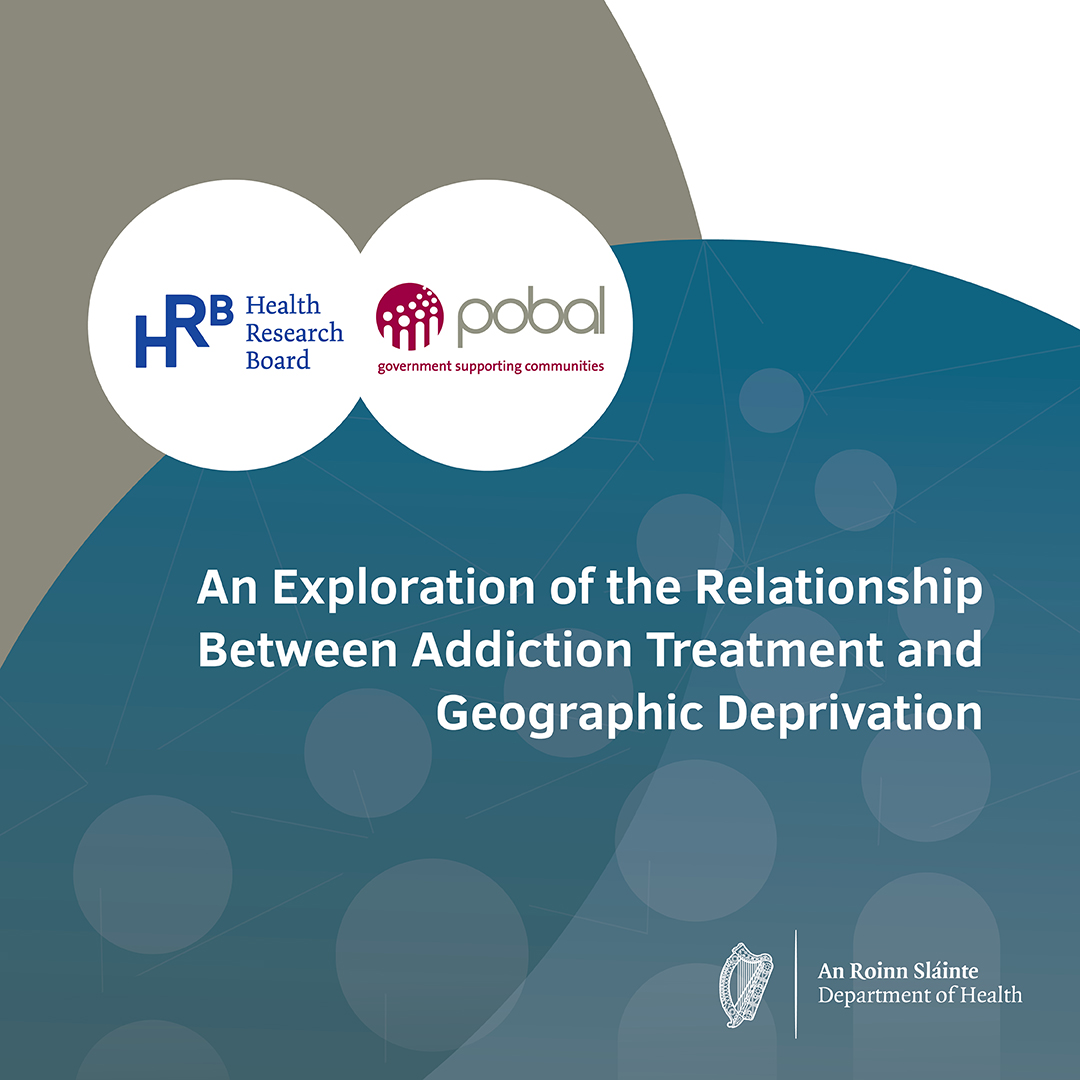
The report, An Exploration of the Relationship Between Addiction Treatment and Geographic Deprivation, was produced by the Health Research Board (HRB) and Pobal on behalf of the Department of Health. It shows Ireland’s most disadvantaged* communities experience significantly higher levels of drug and alcohol treatment than affluent ones.
Areas classified as very disadvantaged and disadvantaged represent 14% of Ireland’s population, and account for 35% of all treatment cases. By contrast, affluent areas represent 15% of the population, but account for only 8% of all treatment cases.
Minister Murnane O’Connor said:
“This research comes at a critical point as we develop our new National Drugs Strategy, and I was pleased to support and fund this research so that our decisions are grounded in robust evidence of need. It provides a strong basis for ensuring that addiction services are designed around people, place and fairness, in line with Sláintecare and our wider public health priorities.
“The research clearly demonstrates the strong link between disadvantage and drug‑related harm, while demand for addiction treatment is reflected across all social categories, the most disadvantaged communities account for a disproportionate share of those in treatment. This underlines the importance of using evidence to drive policy, target investment and shape services where they are needed most.
“That is why this Government has increased investment in community drug services, including €1.89 million announced last year and a further €750,000 secured in Budget 2026 to provide buprenorphine substitution therapy for people living outside Dublin. I remain committed to further investment in line with the findings of this report and to ensuring that addiction treatment services are accessible and available to all who need them.”
Nationally, those living in the most disadvantaged areas have treatment rates 13 times higher than in the most affluent areas. This represents 148 cases per 10,000 in the most disadvantaged areas and 11.5 cases per 10,000 in the very affluent areas.
The disparity is more pronounced for specific drugs. For example, heroin treatment is 41 times more common in disadvantaged areas than affluent ones, followed by crack cocaine (22 times more common in disadvantaged areas) and alcohol (7.5 times more common in disadvantaged areas).
Urban-rural patterns
Treatment rates are highest in cities, with the most deprived urban communities experiencing the highest addiction treatment rates nationally.
Crack cocaine, heroin and benzodiazepines are particularly concentrated in urban disadvantaged neighbourhoods. Alcohol is the most common treatment type in every urban and rural category.
Regional differences
The relationship between treatment rate and deprivation is strongest in the three Health Service Executive (HSE) regions that include Dublin. Treatment rates in HSE Dublin and Midlands and HSE Dublin and South East are more than 15 times higher than in affluent areas, and 13 times higher in HSE Dublin and North East. Meanwhile, they are six to seven times higher in the other three HSE regions (HSE South West, HSE West and North West, and HSE Mid West).
Commenting on the report, HRB Chief Executive Dr Gráinne Gorman, said:
“This report by the Health Research Board and Pobal provides clear evidence that addiction and deprivation are closely intertwined in Irish society. It also highlights the value and importance of collating high-quality evidence and monitoring trends over time, and reinforces the need for targeted investment in the communities in Ireland that are struggling the most with drug and alcohol addiction.”
Notes to editor
Download full report here
Department of Health press release
Webinar registration 14 May 2026 – Exploring the relationship between addiction treatment and deprivation
Find out more about the HRB’s work in the area of drug treatment reporting
An Exploration of the Relationship Between Addiction Treatment and Geographic Deprivation is based on 2024 data from the HRB’s National Drug Treatment Reporting System and the 2022 Pobal HP Deprivation Index. The report is intended to inform the current draft of the National Drug Strategy (2026-2029).
*This report classifies deprivation in the following bands:
Very and extremely disadvantaged: 3.8% of the population
Disadvantaged: 10.2% of the population
Marginally below average: 29.4% of the population
Marginally above average: 41.5% of the population
Affluent: 14.1% of the population
Very affluent: 1.0% of the population