The Health Research Board (HRB) today set out its plan to strengthen Ireland’s health research capability over the next five years through public and patient involvement (PPI), an expanded research workforce and deepening partnerships at all-island, EU and international level.
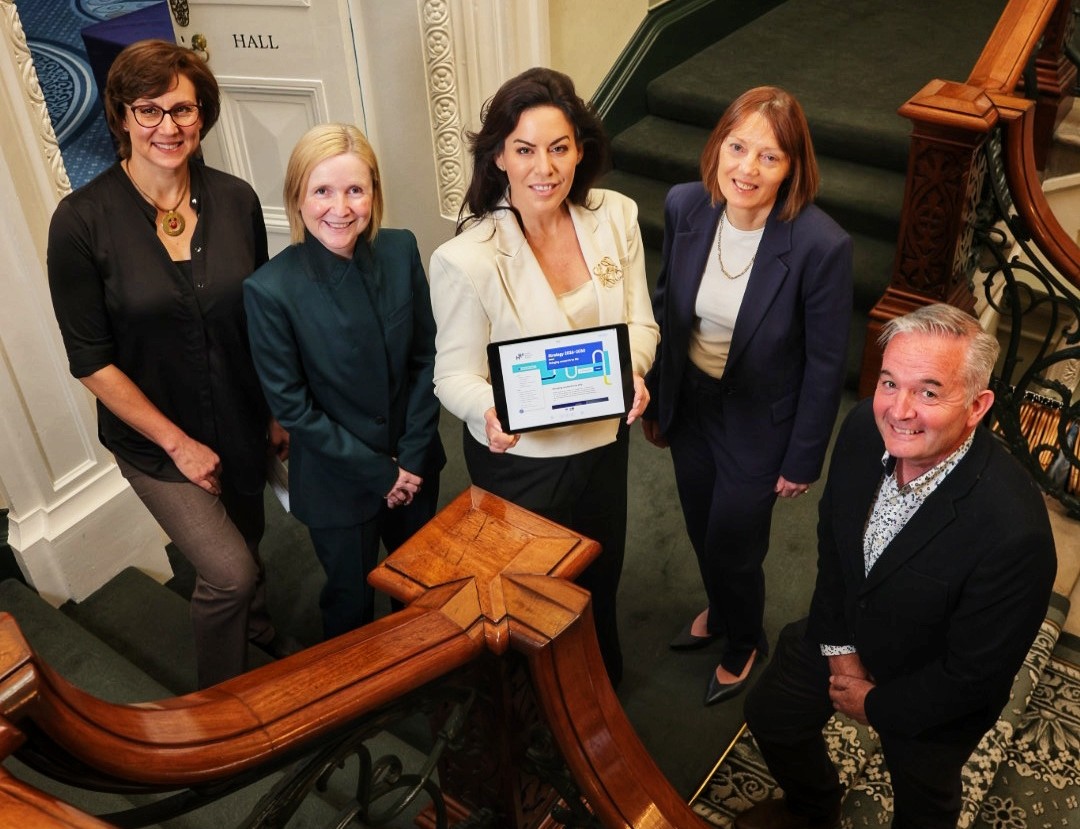
The State agency for funding health research and generating evidence for policy and practice published its new five-year strategy, Bringing Research to Life, at a launch attended by the Minister for Health Jennifer Carroll MacNeill and leaders in health research from across the island.
A defining feature of the strategy is a strengthened commitment to promoting inclusion and PPI – which the HRB pioneered in Ireland – ensuring patients, service users and communities help shape how research is designed and delivered throughout the full research life cycle.
Improving access to clinical trials is central to this, giving more patients earlier access to innovative and potentially life‑saving treatments, while helping ensure that care is informed by the latest evidence.
Ireland ranks in the lower half of EU member states for participation in academic and commercial clinical trials per capita.
Launching the strategy, Minister for Health Jennifer Carroll MacNeill said: “This launch is a celebration of 40 years of extraordinary achievements and the beginning of an exciting new chapter for the Health Research Board.
“At its heart, health research is about people. It is about finding better ways to prevent illness, diagnose disease, deliver treatment and support recovery.
“This new strategy focuses on ensuring that our health and social care services are grounded in evidence, informed by expertise, and ultimately deliver better patient outcomes.”
Under its new strategy, the HRB will work in partnership to foster a more agile and patient‑centred trials ecosystem by increasing funding for investigator‑led trials, strengthening capacity across hospitals and community settings, and supporting innovative trial designs such as data‑enabled and decentralised trials.
The HRB will also support the development of national infrastructure, common performance metrics and a public‑facing trials portal, while continuing to streamline ethics and regulatory pathways to make it easier for patients to access well‑governed clinical trials.
Dr Gráinne Gorman, Chief Executive of the HRB, said the strategy was designed to ensure research delivers real-world impact in an evolving landscape.
“This strategy comes at a critical moment for health and social care, as Ireland faces growing demographic pressures, rising levels of chronic disease, persistent health inequalities, and rapid technological change.
“Over the next five years we will have to navigate these challenges in a fast-moving environment in which data and evidence needs to be higher quality and produced at greater speed to support decision making,” Dr Gorman said.
The strategy is built around five interconnected goals.
- Creating a thriving health research environment by investing in researchers at all career stages, strengthening academic pathways so that health and social care professionals can combine research and practice. This also involves overseeing ethical research standards and consent governance that upholds personal data protections.
- Advancing Ireland’s clinical trial ecosystem working with universities, hospitals and other partners to increase the number and quality of clinical trials available to people across acute, primary, community and public health settings. This includes expanding support for multinational trials.
- Generating evidence for policy and practice through enhanced health information systems, expanded evidence synthesis and knowledge brokering, and ensuring policy makers and practitioners have access to timely, relevant and high-quality evidence in areas including service planning and delivery.
- Investing in innovative research ideas through continued financing of investigator-led research alongside themed calls aligned with national policy priorities. We will also implement initiatives in areas such as genomics, digital health, artificial intelligence and the use of large-scale data to improve health outcomes. Public, patients and carers will be involved across all our funded activity.
- Strategic research partnerships based on strengthened collaboration to tackle health challenges, promote ethical practices in research and support Irish researchers to compete successfully for EU funding. This will include working with partners across the island of Ireland, EU and internationally in research programmes and networks across government, academia, industry and the voluntary sector nationally and internationally.
Launching the strategy, HRB Chair Dr Tracy Cunningham said the next five years would require ambition, collaboration and adaptability.
“We are entering a period where we must avail of the opportunities afforded by digital transformation, including AI, to be more agile and responsive to current and future challenges for health systems.
“This needs to be underpinned by a research ecosystem that is ethical, inclusive and resilient. One that delivers targeted support for clinical trials and sustained investment in research infrastructure and workforce capability, including clear career pathways for researchers and practitioners.”
Progress against the strategy will be monitored through clear actions and performance indicators, with regular reporting and a commitment in the strategy to adapt as the external environment evolves.
View full strategy on www.hrbstrategy2030.ie. The strategy is a digital only publication.