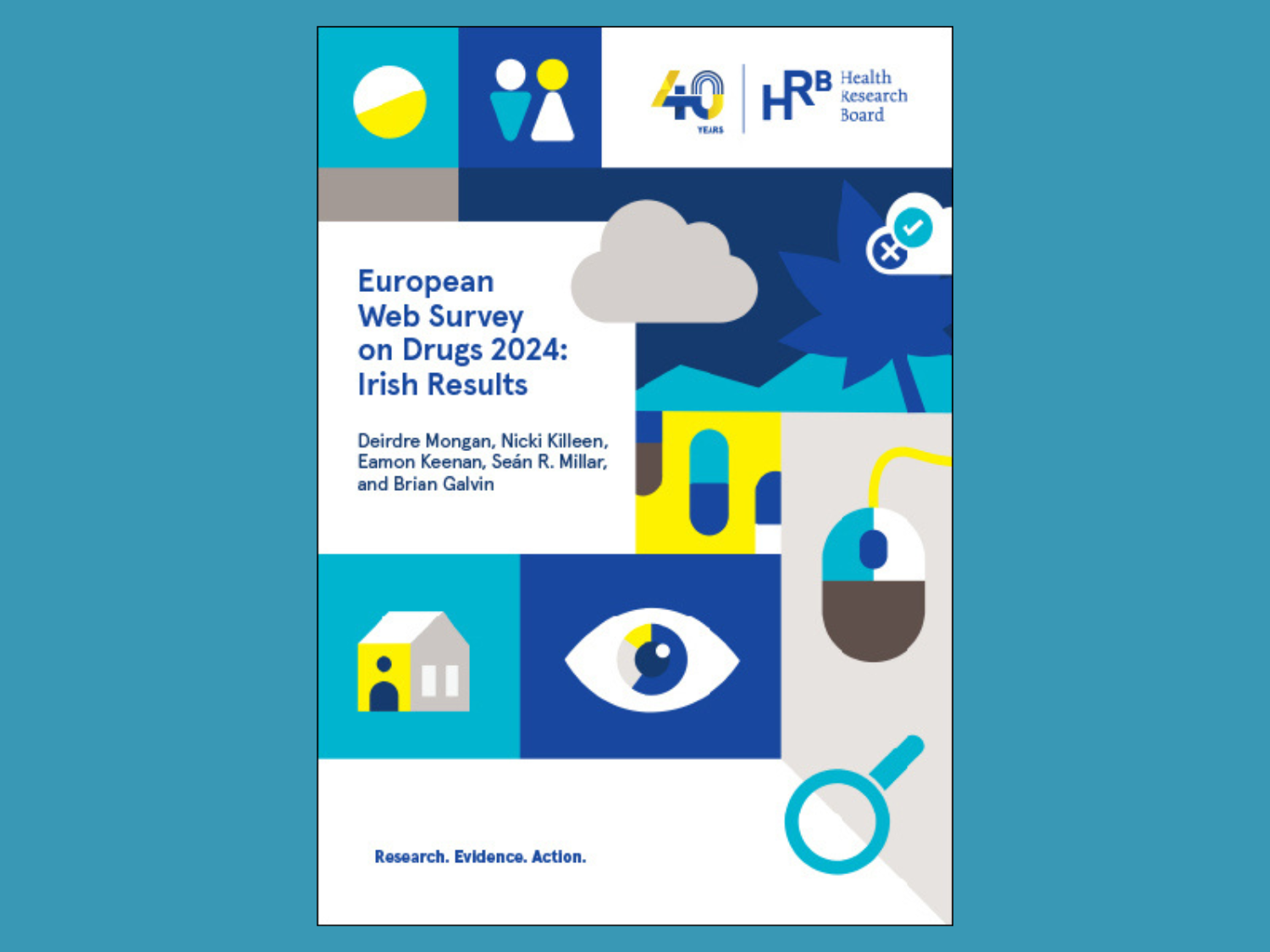
The Health Research Board (HRB) has published the Irish results from the 2024 European Web Survey on Drugs (EWSD), which took place across 35 European countries to determine drug use among people aged 18 years and over.
The survey aims to better understand the behaviour among people who use drugs, particularly occasional users and those who use drugs in nightlife settings.
Key findings
Types of drugs used
The most commonly used drug among Irish respondents was cannabis (85%), followed by cocaine (46%), MDMA (36%), magic mushrooms (31%), semi-synthetic cannabinoids (SSCs at 29%) and ketamine (25%).
The rate of cocaine and ketamine use among Irish respondents is considerably higher than among the entire EWSD sample.
Notable also is the emergence of SSCs, particularly hexahydrocannabinol (HHC), onto the Irish drug market. While 14% of respondents across Europe reported SSC use, 29% of Irish respondents did so.
Socio-demographics
Among Irish respondents, the proportion of males and females using each drug was similar. However, males were much more likely to use magic mushrooms, SSCs, and LSD.
People aged 18-24 were more likely than older age groups to report use of SSCs, ketamine, new psychoactive substance (NPS), and nitrous oxide.
HRB Chief Executive Dr Gráinne Gorman said:
“We typically source information on drug use from general population surveys or treatment data. Tailored recruitment strategies like this web survey allow us to get valuable data we may not otherwise capture by reaching people who use drugs recreationally and who would not present to addiction services. For example, young people who use drugs in nightclubs.
“This information broadens the Health Research Board’s understanding of drug use in Ireland and allows us to provide yet more high-quality evidence to inform policy and prevention strategies.”
Polydrug use
Use of more than one drug (polydrug use) is common, with over 21% reporting the use of at least five different drugs in the past year. Of those who noted ketamine use, 78% also used alcohol, 36% also used cocaine, and 31% also used MDMA.
This is consistent with other Irish research findings that show ketamine use is predominantly concentrated among those engaged in heavy polysubstance use.
Dr Deirdre Mongan, HRB Research Officer, said:
“In terms of polydrug use, the high proportion of respondents reporting simultaneous use of cocaine and alcohol (95% cocaine users) is particularly concerning. This is because mixing substances can complicate treatment and hinder recovery. It can also be dangerous.
“When alcohol and cocaine are mixed together, it increases toxicity to major organs. This leads to increased risk of heart attack, liver damage, violent behaviour, suicidal thoughts, sudden death and other negative consequences.”
How drugs are bought and where they are used
Drugs were mostly purchased through direct contact with a source or from friends. Social media was used infrequently.
Where drugs were used varied by drug. The most common location for using cannabis was at home, while cocaine and MDMA use typically occurred in nightlife settings.
Three-quarters of respondents had not received a structured drug awareness intervention in school. The primary source of drug information was personal research online, while the main source of harm reduction information was through Google searches.
ENDS
Download the full publication here.
Notes to editors
This is the second time Ireland has participated in the EWSD, which aims to better understand the behaviour among people who use drugs, particularly occasional users and those who use drugs in nightlife settings.
The Health Service Executive managed the recruitment of the survey sample and 2,406 people in Ireland participated.
This survey is not a general population study and so cannot be taken as representative of the broader public as a whole. Rather the aim is to investigate the behaviour of a particular sub-group of the population who identify themselves as drug users.
The European Union Drugs Agency (EUDA) is the leading authority on illicit drugs in the European Union and monitors the drugs situation and responses to drug-related problems in Europe. The HRB manages the commissioning of research and monitoring projects on behalf of the Department of Health and as part of its role as the Irish National Focal Point to the EUDA. The EUDA coordinated the EWSD across the 30 participant European countries while the organisation of the EWSD in Ireland was a collaborative effort between HRB and the HSE.